
Long County Active Warrants Explained
Treat a warrant as active or outstanding only when the issuing court or the agency holding it says so. An old case event proves nothing. A Long County warrant may have been served, returned, recalled, released, or quashed after the date on a public item. So call LCSO at 912-545-2118 and ask which court controls the record. The Warrants Division processes and executes criminal arrest warrants. Magistrate Court handles applications and preliminary matters. Misdemeanors and traffic cases go to State Court, while Superior Court holds felony jurisdiction. For city-level matters, Ludowici Municipal Court is the contact.
Database and Roster Differ in Long County
LCSO keeps an internal computer database, with GCIC and NCIC handling entries beyond it. Those systems are operational, not public. The Most Wanted page is a selected roster. It offers no view into the underlying Long County warrant records, and Georgia posts no public statewide warrant-search screen.
| Source | What It Does | Public Limit |
|---|---|---|
| LCSO database | Supports processing and execution | No public query was found |
| GCIC/NCIC | Shares criminal-justice information | Restricted to authorized users |
| Most Wanted page | Publishes selected entries | Not all Long County warrants |
| Court docket | Shows case events | May lag sheriff status |
Here lies a common mistake: missing from one Long County roster is not proof that no warrant exists.
How Long County Tracks Active Warrants
When LCSO receives a criminal arrest warrant, staff process it, enter it in the sheriff's database, identify the subject, and handle the GCIC and NCIC entries. A local address may go to Uniform Patrol for attempted service. The Warrants Division also works leads and sends process to other agencies by fax or mail. Apprehension may bring transport, booking, and bond steps. Long County has no active jail, so another county may house the person. Even then, the sheriff stays responsible for an LCSO hold. Court notice and later case events live in the court records, not the jail's.
Note: Long County publishes no update cadence, so a missing or old roster entry cannot settle present warrant status.
Posting Date Is Not Warrant Date
The Most Wanted interface can sort by posting date, but that date only tells when an item entered the public page. It is not necessarily the day a judge issued the warrant. Nor does it show service, recall, or what happened later in the case. Keep every date with its label. An entry that later moves under an "arrested" filter has not been recalled by that filter. Arrest and warrant recall are separate events. Ask the sheriff about service status, and ask the court about its order.
Key Point: Record the issue date, public posting date, service date, and recall date separately. One date cannot stand in for another.
Inside an Active Warrant Record
Long County publishes no full public active-warrant record and no sample numbering pattern. The useful fields may be spread across a sheriff entry, a court docket, a service return, and a bond record. Ask for the current date on each response you receive.
| Official identifier | Warrant, case, citation, or incident number as recorded by the custodian. |
|---|---|
| Issuing court | The court authorized to address recall, quash, appearance, and disposition. |
| Allegation | The stated charge or basis, not proof of guilt. |
| Issue date | The judicial issue date, distinct from online posting. |
| Bond | Terms set by the proper judicial body. |
| Current status | Active, served, returned, recalled, released, quashed, or unknown. |
Copy official identifiers exactly as the office gives them. Long County publishes no numbering format of its own.
Court and Sheriff Status Can Split
The court and the sheriff hold different parts of a Long County warrant record. A clerk can confirm a docket order or disposition. LCSO can speak to its receipt, service, hold, and operational entry. A court recall may take time or formal notice to reach an enforcement database, so the two sides can briefly disagree. The local records page also describes a limited local check, not a live full-warrant query. Georgia Courts e-access may help you locate a Long State or Superior case, though the provider handoff does not promise a warrant field.
| Need | Ask |
|---|---|
| Execution status | Long County Sheriff’s Office |
| Recall or quash order | Issuing court clerk |
| Bond terms | Appropriate judicial body |
| Custody facility | LCSO first |
Long County Warrant Status Vocabulary
Plain status words prevent mix-ups in Long County. Treat "not publicly posted" as just that, never as a clean bill, and remember that an arrest alone does not end the court process.
- Active or outstanding
- The proper agency confirms that the warrant remains executable.
- Served or executed
- Law enforcement completed service or custody, while the case may continue.
- Returned or not found
- An attempt did not succeed; the process may remain active.
- Recalled or released
- The court or authorized office withdrew the warrant.
- Quashed
- A court set the process aside.
- Unknown
- No current official confirmation is public.
Use neutral terms and seek the latest dated response.
Long County Warrant Roundups and Most-Wanted Lists
Long County runs no amnesty or roundup program. The sheriff keeps an official Most Wanted page you can search by name, posting date, or arrested status, though it never shows every outstanding warrant.
Official-list rule: Use the LCSO page for current public postings. Do not reproduce names, addresses, photographs, or alleged offenses.
The Long County sheriff warns that addresses on those entries can be wrong. Send corrections to LCSO, and never approach anyone listed. Use the separate crime-tip form for tips only; it is not watched around the clock, so call 911 for emergencies.
Long County Active Records Access
The Georgia Open Records Act can open existing LCSO records, but it does not force the Long County sheriff to build a full active-warrant list. So ask narrowly. Email records@longcountyso.org with the record type, date range, and any case or incident number, and request issue, service, return, recall, or release records as needed. The LCSO records procedure promises an answer within three business days when practicable. Expect possible search, retrieval, redaction, and production charges, though the first fifteen minutes cost nothing. Pending investigations, juvenile details, protected persons, medical data, confidential sources, and investigative methods may all be withheld.
Note: A denial, redaction, or no-record response does not by itself prove that no court warrant exists.
When Your Name Is on the Warrant List
Take an active warrant seriously, but a web posting alone settles nothing. Call LCSO first and pin down which court issued the warrant. Then speak with a Georgia lawyer before you walk in anywhere. Counsel can weigh whether surrender, bond, a motion to recall, or a motion to quash fits your case. The sheriff says a person who knows about an outstanding warrant may turn themselves in at the Long County Sheriff's Office. Call ahead, since Long County runs no jail of its own. Booking can mean housing in a facility in a neighboring county. Bond is set by the court, never the sheriff.
Important: Arrange voluntary surrender or court action through official channels, obtain written proof, and verify that both court and sheriff records were updated.
A traffic failure to appear involves two separate releases: the court's and the DDS's. Confirm the court acted first, then check DDS if a license suspension was reported. The wider routes are laid out in the Long County warrant records overview. Keep every dated response and signed order you receive, since a later LCSO check can confirm the enforcement record reflects what the court did in Long County.
Official Long County Warrant Source Views
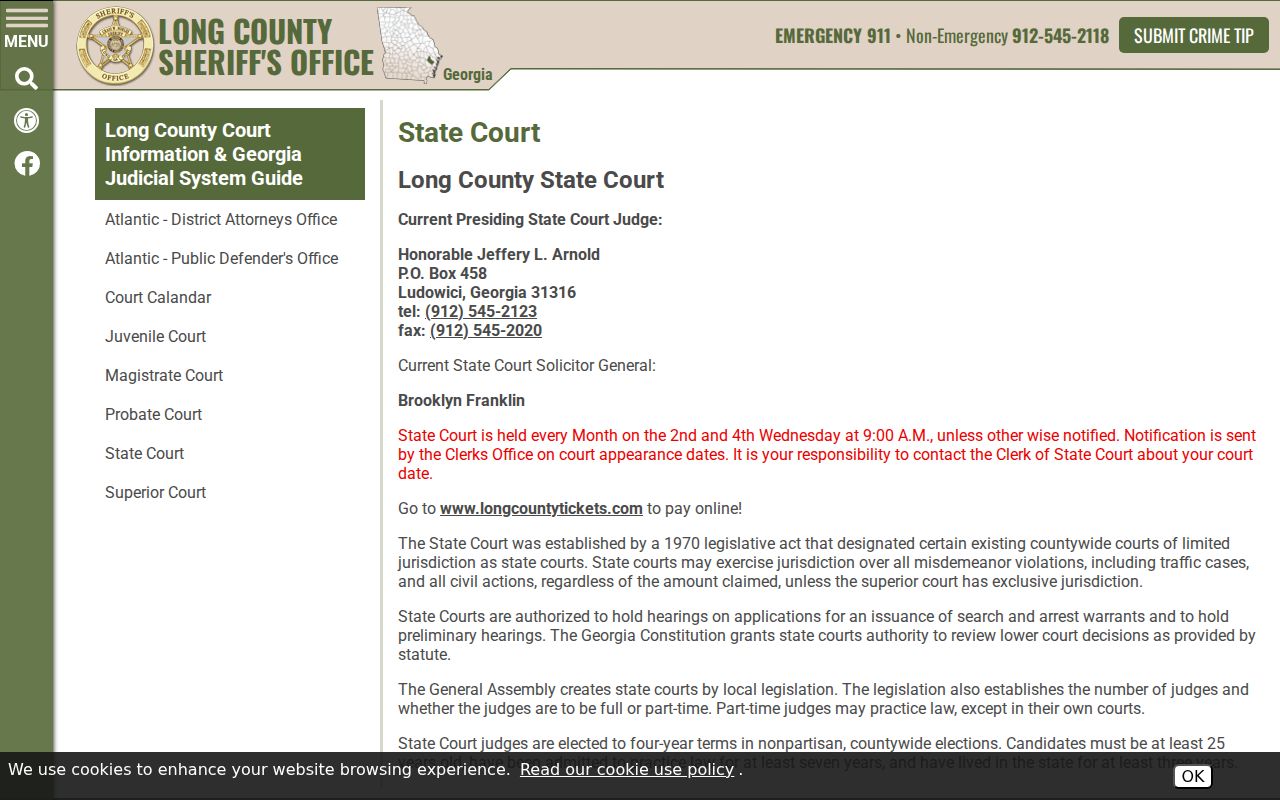
The official State Court source documents traffic, misdemeanor, and warrant authority.
Long County's Superior Court source documents felony jurisdiction, while LCSO stays the source for execution status.
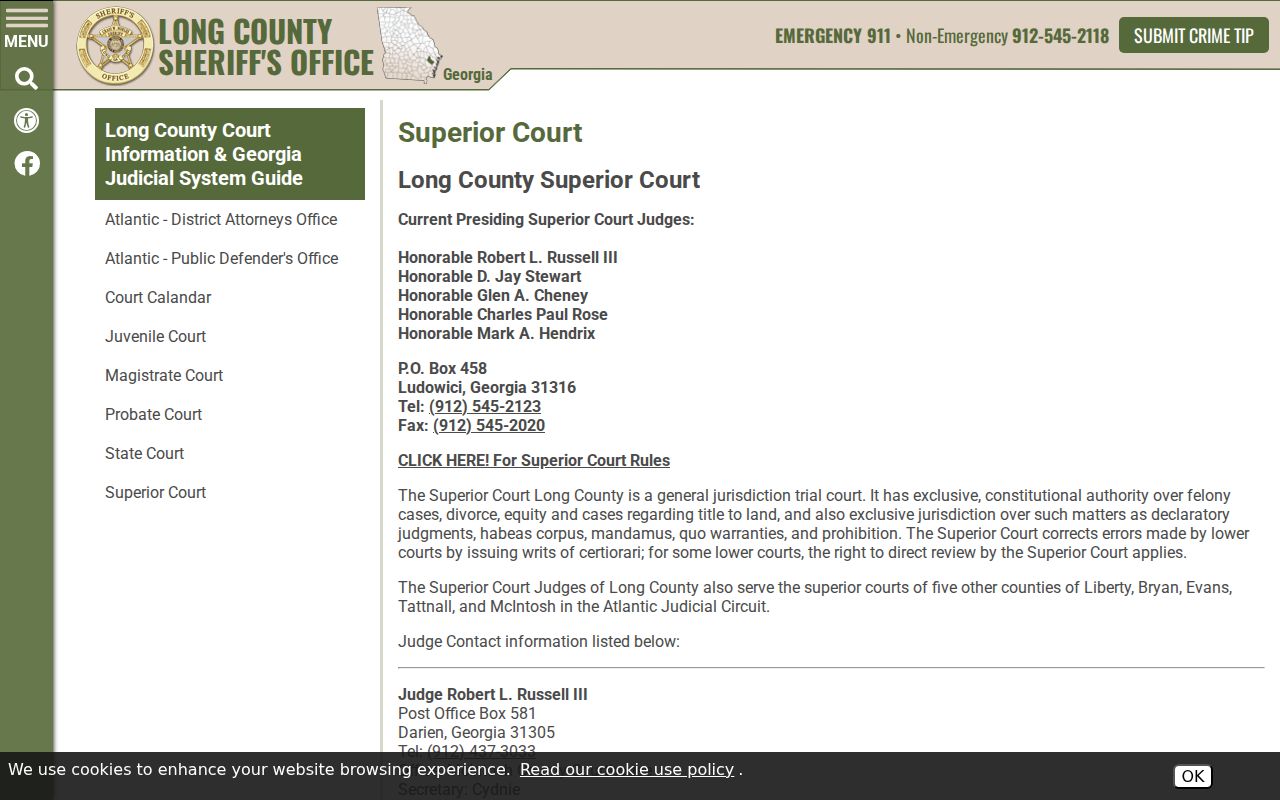
That record establishes authority, not current sheriff status in Long County. The sheriff's records index separates GCIC, FOIA, and local checks.
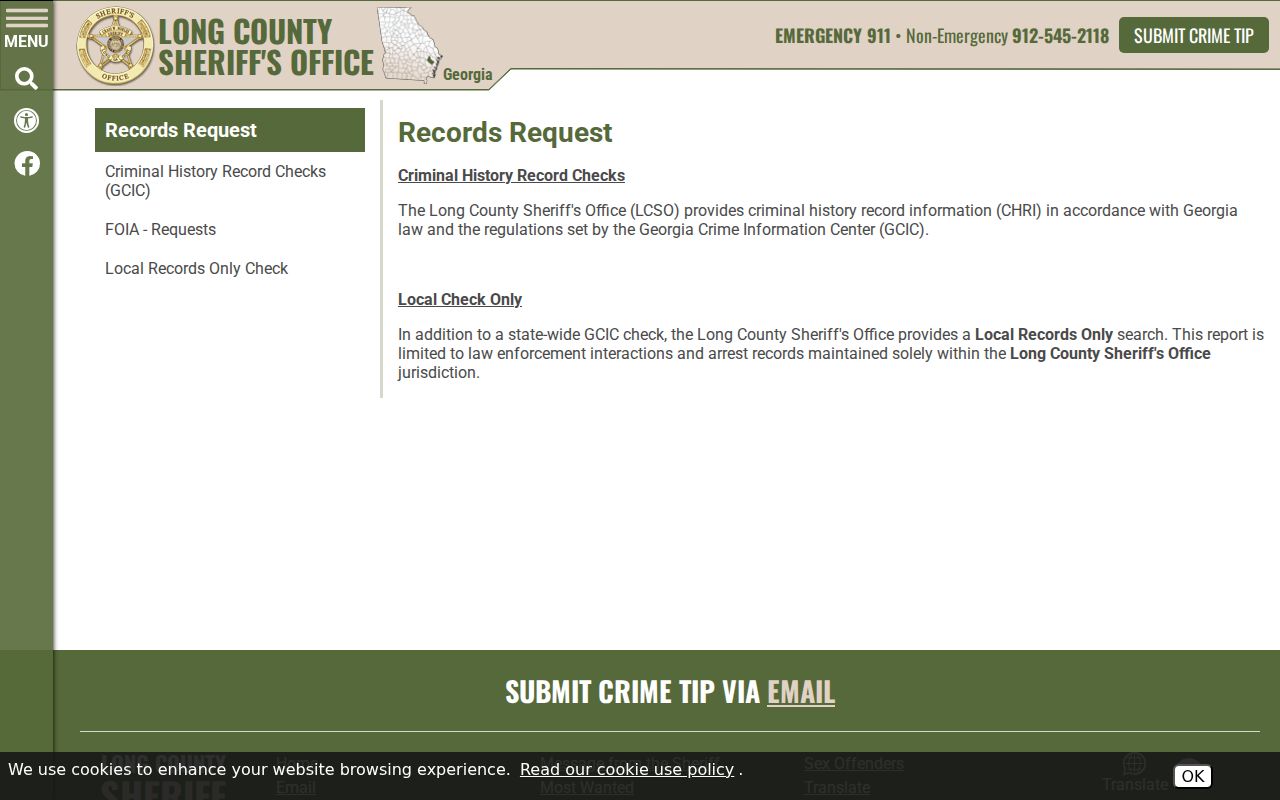
Those categories explain why each request must name the right record. Long County's response procedure is shown there too.
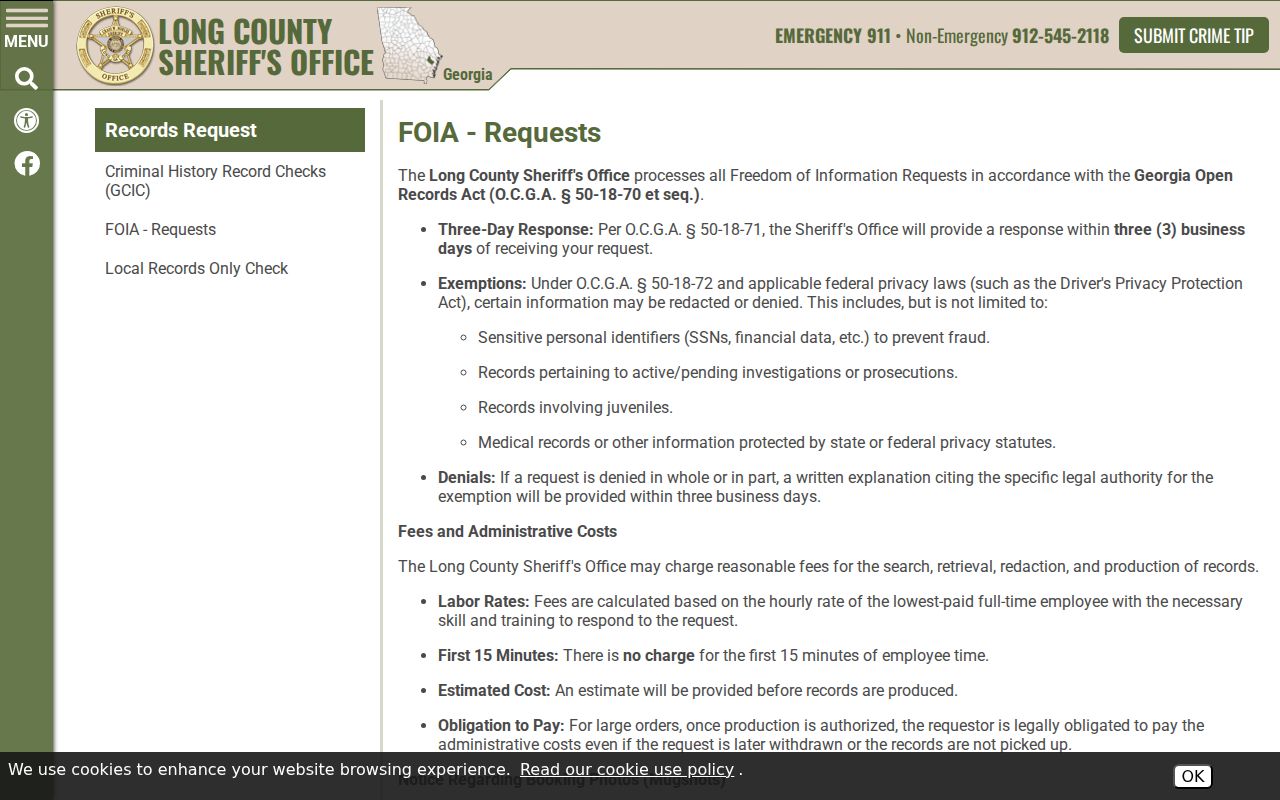
This capture documents access procedure, not guaranteed disclosure.