
Long County Bench Warrants Explained
A bench warrant comes from the court itself. It can issue when someone fails to meet a duty in a case that already exists. The Long County Sheriff's Office points to missed court dates and violations of probation rules as common warrant situations. Neither one triggers a warrant automatically. The judge still has to act under the rules for that court and that case. Docket language varies, so learn the labels. "Failure to appear," or FTA, marks the missed response or appearance. A "bench warrant" is a warrant tied to a court proceeding. "Capias" can appear for a court-directed custody process. These terms overlap, and the clerk can pin down the exact order in a Long County matter, its current status, and the step that addresses it.
Missed Court in Long County
Miss a Long County court date? Call the issuing court first rather than waiting for an online listing. Georgia Courts says the state has no central traffic-citation database, so missed traffic dates must be handled with the court directly. For a State Court matter, the official Long County page lists the clerk at 912-545-2123 and says parties stay responsible for contacting the clerk about dates. Before you dial, pull your facts together. Have the full legal name, date of birth, court name, case or citation number if known, the missed date, and the notice or citation ready. Staff can locate an existing file faster with those details, though disclosure is not guaranteed. Then ask the questions that matter. Does an FTA, bench warrant, or capias exist? Is an appearance, payment, or bond required? And how does the court document a recall or release?
How Long County Bench Warrants Are Issued
Only a judge issues a bench warrant, and only within a case that already exists. The judge decides whether the missed duty supports a custody order or another response. Long County publishes no universal grace period, no warning schedule, and no bench-warrant form. So don't assume a mailed notice went out. Silence doesn't mean no order exists. Once issued, the record splits across offices. The court or clerk keeps the docket entry and any recall order. The Long County Sheriff's Office keeps execution and service information. Received warrants are processed, entered in the sheriff's computer database, checked through GCIC and NCIC procedures, and assigned for attempted service when a local address is available. Those systems stay internal. They are not public search portals.
Long County Bench Warrant Terms
Labels matter in Long County. One status word can change your next move. The county publishes no sample bench warrant or capias record, so confirm the exact term with the clerk rather than inferring it from an old docket.
- Issued
- The court authorized the process. It does not by itself show that the warrant remains open today.
- Active or outstanding
- The issuing authority confirms that the warrant is still executable.
- Served or executed
- Law enforcement completed the arrest or service, while the case itself continues in court.
- Recalled, released, or quashed
- The court or authorized agency withdrew or cleared the process. Ask for written confirmation.
- Status unknown
- No official current confirmation is publicly available.
Bench and Arrest Warrants Compared
Each order can authorize custody, but at different stages. Read Long County records by trigger, issuing authority, and underlying case, not merely by the word "warrant."
| Feature | Bench Warrant | Arrest Warrant |
|---|---|---|
| Typical setting | An existing court case or required appearance | A criminal process based on alleged probable cause |
| Common trigger | A missed date or failure to follow a court direction | A judge’s authorization to arrest for an alleged offense |
| Key custodian | The issuing court and its clerk | The issuing court plus the serving sheriff |
| Current-status proof | Court confirmation of recall or release | Court or sheriff confirmation of execution or recall |
Bench warrants and arrest warrants follow different routes. For the sheriff's execution side, see the Long County arrest warrant search page.
Long County Records Are Split
A case docket, a local records check, and a current bench-warrant confirmation answer three different questions. Georgia Courts lists Long State and Long Superior Courts through an account-based e-access provider. That route may show a case number or event. It promises no free, real-time warrant field. LCSO also states that its local records check does not include court dispositions maintained by the Clerk of Superior and State Court. Long County keeps no single bench-warrant window. So the pieces sit in separate hands. The sheriff's forms page lays out the record services LCSO makes available, and the Long County Sheriff's Office forms index helps you tell those services apart before you make a request.
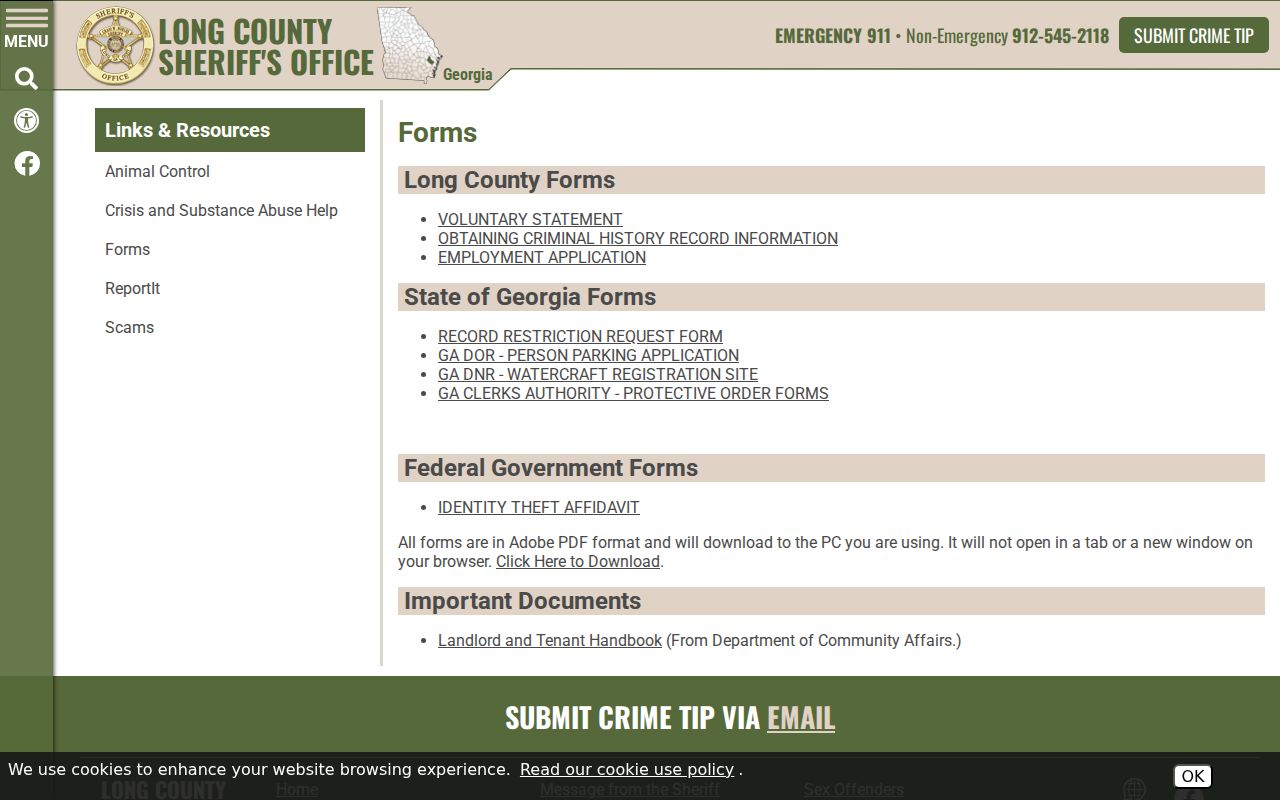
The Long County forms index lists the official categories. It shows no completed form, no private details, and no dedicated public bench-warrant form.
Resolving a Long County Bench Warrant
Fixing a Long County bench warrant starts with the issuing court. Only that court controls its own order. A sheriff can confirm execution information on its end, but the judge decides whether an appearance, payment, bond, or another filing is required. Talk to an attorney before you appear if you can. Georgia's official warrant guidance warns that an in-person inquiry can lead to custody.
- Call the likely court and identify the case, citation, and missed date.
- Ask whether the current order is called an FTA, bench warrant, or capias.
- Ask what appearance, payment, bond, or filing the judge requires.
- Request documentation that shows any recall, release, or new court setting.
- For a traffic matter, verify any separate DDS suspension after the court acts.
Call before appearing: An in-person warrant inquiry may result in custody, so confirm the office, procedure, identification needs, and possible bond steps first.
Long County Bench Warrant Records Requests
Need the paper itself, not just a status answer over the phone? Request disclosable records that already exist from Long County. Email the Sheriff's Office custodian at records@longcountyso.org, or call 912-545-2118 and ask for Open Records personnel Mark Hall. Keep in mind that a docket, disposition, or recall order may sit with the clerk of the issuing court instead. A tight request gets the best results. Name the record component, the date range, the case or citation number, and the electronic format you want. The Long County administration page notes that Georgia agencies have no duty to create a new summary or compilation when none exists.
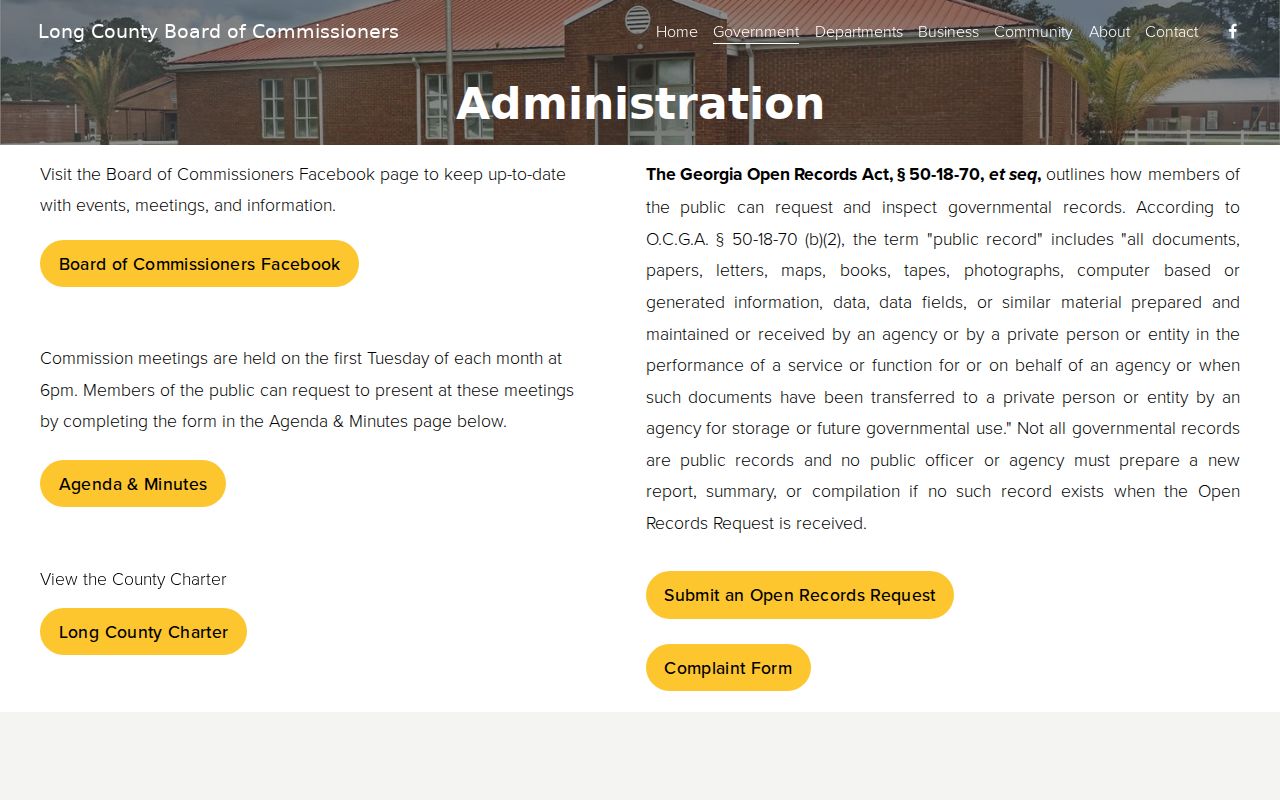
Frame any request around a record that already exists, such as an issued warrant, a service return, or a recall order, not a demand for a new warrant list. Under O.C.G.A. § 50-18-71, LCSO responds within three business days when practicable. Fees for search, retrieval, redaction, and production may apply. The first 15 minutes carry no charge. Long County applies the exemptions under O.C.G.A. § 50-18-72, including active investigations, juvenile matters, and medical data.
Finding the Court That Issued the Warrant
The right Long County court depends on the original matter behind the warrant. State Court handles misdemeanors and traffic cases and may conduct authorized warrant or preliminary hearings. Magistrate Court handles warrants, preliminary matters, and bail where authorized. Superior Court serves as the general-jurisdiction felony court. Ludowici Municipal Court is the route for local ordinances and municipal citations. One wrinkle deserves attention. The phone numbers conflict. Magistrate Court's own page lists 912-545-2315, while the county directory lists 912-545-2131, so call both rather than trusting either. State Court and Superior Court share 912-545-2123 in the official court pages. For a municipal citation, work through the Ludowici court or City Hall, because the sheriff cannot alter a city court's order.
Bench Warrant Search Is Not History
A criminal-history report is not a Long County bench warrant search. The two answer different questions. The sheriff's criminal-history procedure carries its own photo-identification requirement and a $20 cash fee. That amount belongs to the report alone. Never attach it to a records request or a call to the clerk. The official LCSO criminal-history instructions spell out that separate scope and fee.
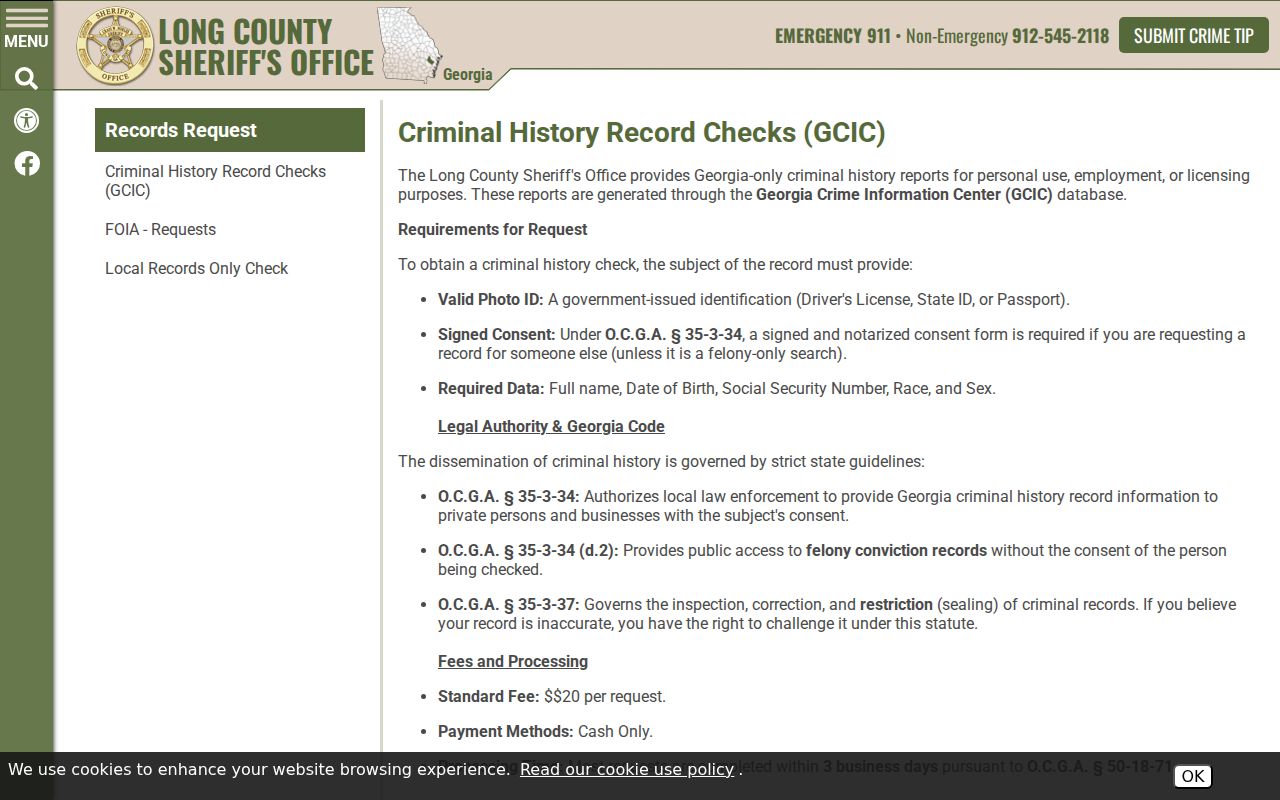
A history report still won't answer a live bench-warrant question. That answer comes from the issuing court or the Sheriff's Office. The Most Wanted interface is not a bench-warrant ledger either. A missing name proves nothing. A posted name still needs current confirmation. Suppose a Long County court says the order was recalled. Keep the written notice, and verify any related sheriff or DDS record the court says should be updated. Traffic-linked bench warrants run on two tracks. Court action and DDS action stay separate. DDS says an FTA suspension becomes effective 28 calendar days after it receives notice. Ask the Long County court whether it sent a release, then check the license record through DDS Online Services. A payment receipt alone proves neither that the court recalled the warrant nor that DDS finished its update.